back to HYPP Zoology home page
Description, Biology, Life Cycle, Damage, Common Names, Images
[R]Biology
- Host plants: currant, black currant, gooseberry (Ribes uva-crispa).
- Adult: the imaginal moult occurs at the surface of the ground. The moth has a noctural activity. The female lays its eggs singly or in small clusters on the calyx of flowers (*) or on young berries.
- Egg: embryonic development lasts 10 to 15 days.
- Larva: its growth lasts about two months. The neonate caterpillar penetrates a berry and devours its contents, then, by weaving silk threads which unite several neighbouring berries, it penetrates a second and a third berry, sometimes a fourth (*) .
- Pupa: the larva pupates in the ground, inside a cocoon.
[R]Life Cycle
- 1 generation per year.
- The moth appears from the end of April to mid-May, at the time of the flowering of Ribes. In July, at the end of its development, the larva descends into the ground, weaves a cocoon, pupates in September and hibernates.
[R]Damage
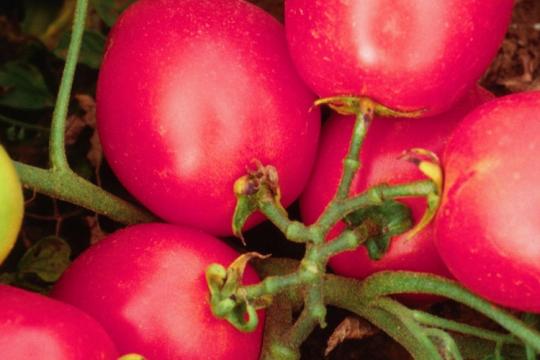
- The berries of attacked Ribes change colour; they take on a pink hue which can become more or less dark reddish for the largest of them. This colour is mistaken for maturity amongst the other berries which have remained green.
- One fruit is generally sufficient for the growth of the caterpillar (*) .
- The damaged fruit clusters are downgraded at harvest time, the fruits being soiled by silken threads and grains of frass (*) .
[R]Remark/A>
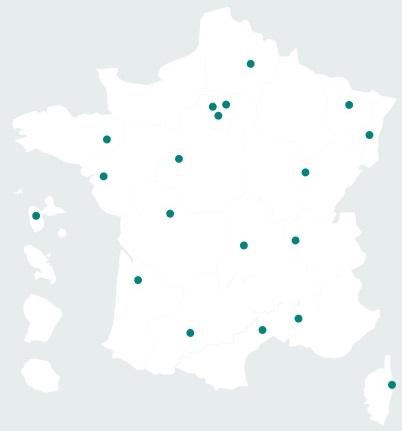
This species can be found in various European countries. Introduced to the United-States, it is unknown in England.
[R]Common Names
DE: Stachelbeer Zünsler ES: Piral del grosellero FR: Pyrale des groseilliers IT: Piralide del ribes PT: Pirale da groselheira GB: Goosberry moth, Goosberry fruitworm

HYPPZ on line : Species (scientific name), Pests (common names), Glossary, Crops.
back to HYPP Zoology home page