PFIE - EU 1277 Experimental Infectiology Platform
Between 2004 and 1 January 2006, two existing animal experimental units (set up in 1995 and 2002), were combined to form a single experimental platform (UE PFIE). It is recognised as a national platform by the National Inter-Organisation Network and was certified a “strategic platform” by the IBISA in October 2008.
Management
A Management Committee: 4 engineers.
Committee for Scientific Use made up of INRA and non-INRA members (including AFSSA, CEA, and the Institut Pasteur).
An engineering unit for experimentation, responsible for coordinating experiments, interdisciplinary organisation, innovation, training, etc.
It is France’s largest facility for animal experimentation in infectiology and is equipped with A2-A3 level biosafety containment or isolation units for both production animals and animal models. It is open to the whole of the European scientific community, public organizations and private companies alike. It will be expanded in 2009 when the INPREST (National protected facilities for research into Transmissible Spongiform Encephalopathies) facility comes onstream. The PFIE and the “Animal Infectious Diseases and Veterinary Public health” (IASP) research unit constitute the Animal health centre of Tours (Pôle Santé Animale de Tours (PSAT)). The unit is being upgraded in accordance with a €16m development plan, running from 2002 to 2010 and jointly financed by local and government organisations.

Partnerships
>> National partnerships
AFSSA, CNRS, INRA, INSERM, Universities.
Regional committee of Ethics for Animal Experimentation, Local Vet Officer Bureau, etc.
>>European partnerships
ESFRI: European Strategy Forum on Research Infrastructures.
NADIR, European “Capacities” program on Network for Animal Diseases-Infectiology Research: VLA, IAH, Moredun Res Inst (UK), INIA, CRESA (Spain), FLI (Germany), CIDC (ND), Nat Vet Inst (DK). INRA coordinates this programme.
>>Private partnerships
CEVA, Grimaud, Mérial, Novartis, Sebifa and others.
Activities and services
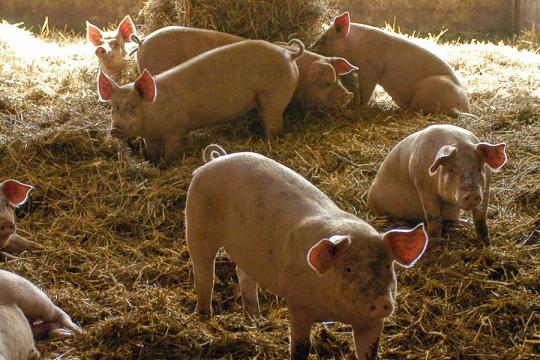
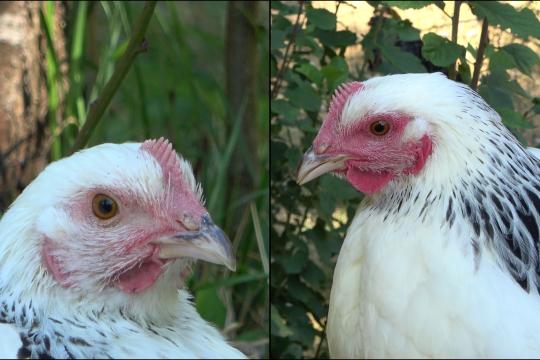
Production and supply of farm animals (bovine, caprine, ovine, pigs, poultry, etc.) and laboratory animals (mice, rabbits, etc.) and their products (e.g. eggs) with:
• recognised genetic status (histocompatible lines of chicken, pigs, and sheep);
• recognised sanitary status: Specific Pathogen Free Animals (eggs, mice, poultry, rabbits); animals with controlled sanitary status (bovine, sheep, pigs, poultry); axenic or gnotobiotic chicken;
• developing animal lines of required sanitary status and leaning of animal lines-strains to achieve requisite sanitary status.
Performing experimental protocols on all these animal species in A2 and A3 levels of confinement, isolators, conventional buildings or meadows. The pathogens studied are (i) those for which the animals are the natural targets, or (ii) human pathogens, for which animals are used as models. Typical studies include:
- testing vaccines on all farm animal species using class 1 to 3 pathogenic agents;
- testing pharmaceutical products both in large animals and in animal models; examination of experimental infections with class 1 to 3 pathogenic agents;
- scintigraphic imaging in A3 confined surroundings (all species up to the size of pig/ sheep),
- Quality procedure in accordance with ISO 9001:2000, accreditation since May, 2008.
Writing: DSA
Creation date: 29 September 2009
Update: 29 September 2009
Contact:
Plate forme d'infectiologie expérimentale
Inra - Centre de Tours
37380 Nouzilly
France