back to HYPP Pathology
home page


Ascochyta pisi Lib.

Mycologia, FUNGI IMPERFECTI, SPHAEROPSIDALES, PHOMACEAE .

Crops attacked: spring pea, .


[R]Common Names :

Pisi blight,

Identification, Description, Biology, Epidemiology, Treatement, Possible misleading, Images


[R]Identification
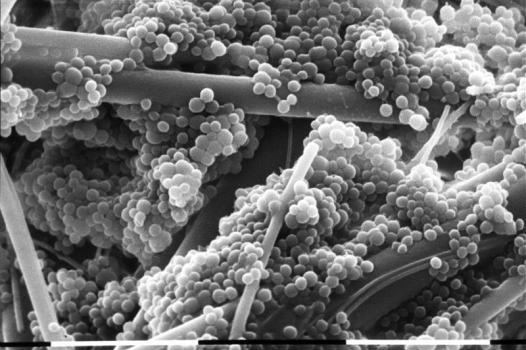
Globose pycnidiospores are detectable with a light microscope ; they are all septated and over 11 mm long.

[R]Description
Foliar characteristic spots are the main symptom of the disease.
They vary in size, are pale brown, round, circled by a brown girdle with dark marks (pycnidia) forming ring patterns at the center of the leaf. The lesions can enlarge in the presence of free water. Spots which appear above the first node are oval.
Seeds are attacked with no visible symptoms showing on the pods.
Though frequent, Ascochyta pisi antrachnose causes less damage than antrachnoses induced by Mycosphaerella pinodes .

[R]Biology
A. pisi s transmitted by the infected seeds to the first leaves when they germinate from the soil.
Later the fungus only spreads through the pycnidiospores.

[R]Epidemiology
Infection is extended to the whole plant in persistent rainy weather with foci gradually progressing from plant to plant by splash (carrier of pycnidiospores).

[R]Treatement
Sow healthy or treated seeds.
Use resistant cultivars (leafless).

[R]Possible misleading
Mycosporella pinodes and A. pinodella but the foot-rot is absent.

[R] Images

  1. Ascochyta pisi , Anthracnose (ALLARD C., INRA)
    Anthracnose on pea Pea stem infected by anthracnose.
  2. Ascochyta pisi , Anthracnose (INRA)
    Anthracnose on pea Spot of anthracnose on pea leaflets.
  3. Ascochyta pisi , Anthracnose (INRA)
    Anthracnose on pea Grey spot surrounded by a brown edge made of pycnidia on the upper surface of a pea leaflet.

To read this page in French

HYP3 on line : Species (scientific name), Diseases (common names), Glossary, Crops.

back to HYPP Pathology home page