back to HYPP Pathology
Mycologia, MASTIGOMYCOTINA, PERONOSPORALES, PYTHIACEAE .
Identification, Description, Biology, Epidemiology, Treatement, Possible misleading, Images
[R]Description
Large oily areas form on the upper surface of the leaves, drying towards their centre, and corresponding to a downy white coating on the underside of the leaf.
The parts of the veins passing through these regions turn brownish in colour.
Brown spots form on the stem and petioles.
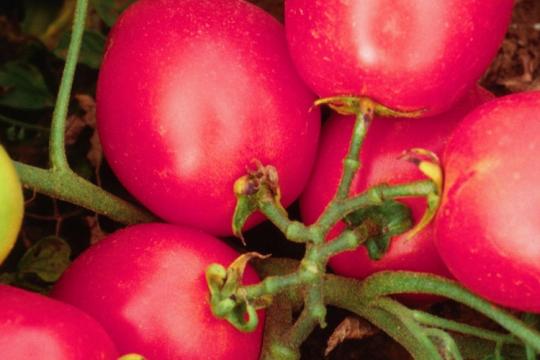
The immature mildewy fruit have hard brown bumps, that are sometimes marbled with white downy regions. The fruit never attains maturity.
The disease evolves very rapidly.
[R]Biology
The fungus remains viable as oospores in the soil surrounded diseasing potato tubers.
These then germinate producing diseased seedlings.
The sporangi (conidia) form on the underside of the leaves and are spread by the wind, sometimes over long distances, contaminating solanaceae crops.
[R]Epidemiology
Rain, a relative humidity over 90 %, and temperatures between 10 and 25 °C. favour development of the disease.
The fungus is destroyed by persistent dry weather and temperatures in the neighbourhood of 30 °C.
[R]Treatement
Avoid planting near potato crops.
Follow local guidelines for preventative treatments using authorized products as soon as the disease is reported in the region.

HYP3 on line : Species (scientific name), Diseases (common names), Glossary, Crops.
back to HYPP Pathology home page