back to HYPP Zoology home page
Description, Biology, Life Cycle, Damage, Common Names, Images
[R]Biology
The most widely distributed species are M. arenaria, M. incognita, M. javanica, M. hapla, the latter being adapted to colder climates. The host range of M. naasi is narrower, this species attacking cereals.
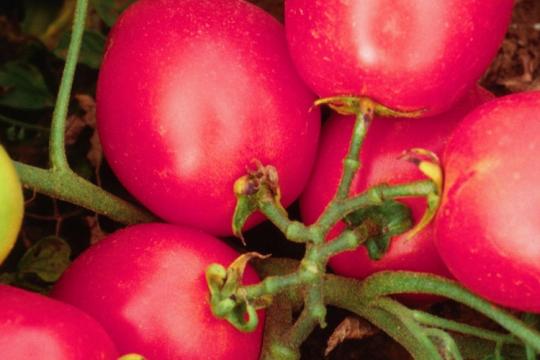
- Host plants: being very polyphagous, this nematode is a very dangerous pest infesting a wide range of crops. The most susceptible include Solanaceae (tomato, egg plant, potato), Cucurbitaceae (melon, cucumber), Leguminosae (bean), carrot, salsify, lettuce, witloof chicory, artichoke, mangold, celery, etc.
- After hatching, the juvenile moves within the film of water which covers the soil particles, making its way to young roots. It perforates the cell wall with its stylet, enters the root and heads for the conducting vessels, causing the formation of the giant cells necessary to its growth.
This results in the formation of a characteristic gall which soon envelops the pest completely and blocks the sap-conducting vessels (*) .
The juvenile transforms into a male or a female after several moults. The male is released outside the root, the immobile female remaining in the plant tissue (*) and laying 1000-2000 eggs incorporated in a jelly-like coating that makes them stick together. The egg masses project from the surface of young roots.
[R]Life Cycle
- The duration of the life-cycle depends on temperature; when it is maintained at a low level, as is the case for glasshouse lettuce crops in winter, nematode numbers increase slowly. As soon as temperatures rise, the rate of development increases, the whole process lasting 3 weeks at a temperature of 28°C.
Several generations may succeed one another when conditions are favourable, infestations reaching considerable proportions.
- All eggs do not hatch simultaneously, some of them hatching only several months after egg-laying and resisting cold and dryness. Thus, the soil maintains its infectious potential during winter or when land remains fallow.
[R]Damage
- In case of heavy attacks on certain susceptible plants (cucumber), galls can become very large, the root system being reduced to a swollen stump without hairs. Tubers become forked and warty (*) .
The growth of the aerial part can be stunted and leaves can turn yellow. Infested plants are very susceptible to drought.
- Moreover, the presence of this nematode favours or worsens attacks by fungi such as Fusarium or Verticillium albo-atrum which, growing from the soil, can infect all the conducting vessels of the plant.
DE: Wurzelgallenälchen ES: Nematodo de las raices FR: Nématodes ŕ galle des racines IT: Nematodi galligeni delle radici PT: Nemátodo das galhas GB: Root knot nematode

HYPPZ on line : Species (scientific name), Pests (common names), Glossary, Crops.
back to HYPP Zoology home page